The magnitude of our wellbeing moment
ANALYSIS
One of the most ground-breaking economic reforms of our generation was launched last week, with the Federal Treasurer Jim Chalmers finally publishing his Measuring What Matters wellbeing framework.
This is something that has been much anticipated by policy purists and social justice advocates, yet it is widely publicly misunderstood—if the public has registered its existence at all.
The framework is a first step towards Australia adopting a full blown wellbeing budgeting approach. That is, elevating social and environmental measures to the same level of importance as classical economic indicators, and then reorienting the entire business of government accordingly.
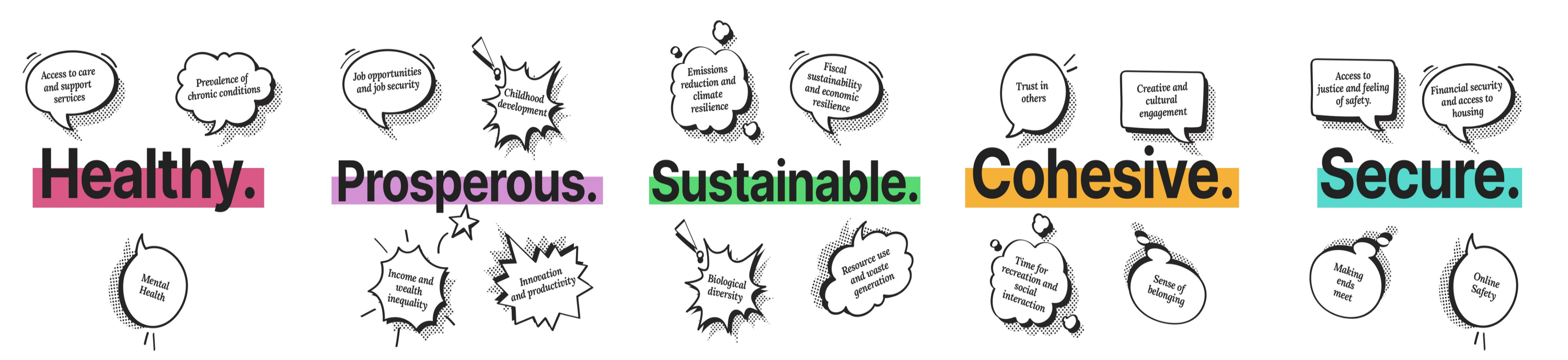
The Framework includes measurements for things like financial security, overall happiness, social connectedness and housing security.
By putting these indicators front and centre, Chalmers is inviting us into a historically significant conversation that will potentially transform how the Federal Budget is shaped each year. It is a conversation through which the Government is trying to “measure what matters”, to better understand the drivers and actors that inform our individual and collective wellbeing.
In response to this significant moment, the usual chorus of critics have been making noise. Some have questioned the entire concept of wellbeing, but as the discourse around wellbeing economics becomes more mainstream and accepted this line of attack has begun to look old.
Instead, criticisms that have gained most traction are about the currency of data used in the Framework, with commentators claiming that the data—which in some cases is one to three years old—”might as well be from last century.”
These criticisms somewhat miss the point.
The Wellbeing Framework is a first step by which the Australian Treasury can move beyond traditional economic measures of success and take a long-term view of our progress.
Currency of data is obviously important in policy formulation. But for the establishment of a wellbeing framework, it is also important that we find a way to pull back and look at the big picture, at macro indicators and broad trends.
Arguably, the flurry of criticism around Chalmer’s use of data that is not up-to-the-minute in fact plays into the very problem of short-termism that a genuine wellbeing framework can be set up to counter.
For many years people have been calling out for leaders who have long-term vision; leaders who care about what is shaping ordinary people’s lives.
There is a small but noisy minority of people with vested interests who don’t want this conversation to happen and don’t want a change to the status quo. There are people who benefit from only measuring GDP and short-term economic trends.
And then there are the majority of people—’ordinary’ Australians, for whom conversations about the economy are generally boiled down to a yearly blip on budget night.
What should be a broad and inclusive conversation about what matters to us as a society gets simplified into a “winners and losers” column on the first Tuesday of May.
The Australian people are very rarely genuinely asked what matters to us or how government should prioritise budget spending. We get to cast a vote every few years and then we are expected to accept our position in the “loser” column come budget night.
VCOSS has been advocating for many years to do things differently. We have been advocating for a wellbeing economy.
Our health and social services systems have been severely stretched by the COVID pandemic, we are facing unprecedented natural disasters and emergencies driven by climate change, and inequality is growing.
And while traditional economic indicators may have presented a positive story over the past thirty years, many people do not feel like they share in this success and don’t feel optimistic for the future. People experiencing poverty and disadvantage are doing it tough; their experiences do not reflect the wealth of a supposedly prosperous society.
In 2022 and 2023, VCOSS has conducted listening tours around Victoria, speaking to over 1,500 people. The listening tours are designed to better understand people’s experience of the pandemic and their hopes and fears for the future. This was not a run-of-the-mill consultation process; it was meaningful community engagement about what matters to people, conducted in their safe and familiar places.
What we heard was not out of whack with the indicators in the Wellbeing Framework. We heard that people across the state are worried about their health, experiencing loneliness, and struggling to afford the basic necessities of life.
We can quibble with the currency of Chalmers’ data, but our up-to-the-minute exercise in listening to the Victorian people tells us that he is asking the right questions, and this is a huge step forward.
To do what matters we have to measure what matters. We have to define our priorities in clear indicators.
It is our chosen indicators that reveal what we truly collectively value. Perhaps this is why the Framework has inspired such a strong reaction.
Some political commentators see this Framework and the act of government measuring our society’s wellbeing as a threat to their status quo.
But the worst outcome of the Wellbeing Framework would be for political leaders to decide that it is easier not to measure our health, security, sustainability, cohesion, and prosperity. For them to not engage with intellectual reflection on how we are tracking and where we want to get to.
To move this conversation forward, the process now needs to develop into one of deep listening to the values of the Australian people, and into the complex task of collecting the right data.
This is no easy task. To collect quality and insightful data takes time, dedication and resources. But it is a task worth undertaking.
We need to listen to people about what truly matters to them, to collect the data that can help us understand the driving forces in people’s lives.
We need to keep talking about our values and who our economy serves.
Then we might find that, come budget night in May, many more of us will be in the winners column.
VCOSS is the peak body for Victoria’s social and community sector, and the state’s premier social advocacy body.
We work towards a Victoria free from poverty and disadvantage, where every person and community experiences genuine wellbeing. Read more.

VCOSS acknowledges the Traditional Owners of Country, and we pay respect to Elders and Ancestors. Our business is conducted on sovereign, unceded Aboriginal land. The VCOSS offices are located on Wurundjeri Woiwurrung land in central Naarm.