- Home
- >
- Policy
- >
- Policy Library
Ripple Effects: Spatial injustice and the 2022 Victorian floods
In October 2022 Victoria experienced its wettest month on record and major floods devastated communities across our state.
The consequences of the floods were deep and long-lasting, causing ripple effects for communities that are still being felt today.
Sixty-three of Victoria’s 79 local government areas were affected. Two people tragically lost their lives, 5,017 homes and businesses were destroyed or damaged, and more than 5,000 known Aboriginal cultural heritage sites were impacted.
Disasters like the 2022 floods affect everyone, but not equally.
This report finds that certain Victorians were more likely to live in flood-affected areas, including people experiencing socioeconomic disadvantage. A majority (59%) of regional flood-affected areas had rates of poverty above the regional average.
Almost one-third (32%) had very high rates of poverty of more than 15%. In Shepparton South East and Mildura North, for example, approximately one in five people were experiencing poverty in 2021.
In 2021, more than one in three (33.96%) households in regional flood-affected areas were experiencing the highest levels of socioeconomic disadvantage according to the ABS Index of Household Advantage and Disadvantage. This is almost 6% higher compared with unaffected regional areas.
Aboriginal and Torres Strait Islander people were also more likely to live in regional flood-affected areas. The Aboriginal and Torres Strait Islander population was higher in 93% of flood-affected regional areas than the average in unaffected regional areas.
In regional Victoria, culturally and linguistically diverse people were more likely to live in the flood-affected areas. In Melbourne, almost one in two people in hard-hit Maribyrnong were culturally and linguistically diverse.
Disasters like the 2022 floods affect everyone, but not equally.
This report also considers community-level outcomes after the floods.
After the floods, inequality was exacerbated in affected areas.
- After the floods, disposable income was $22,818/year lower for households in affected areas compared with similar households in unaffected areas.
- Poverty increased after, with one in five people experiencing poverty in affected areas in 2023, and poverty 6.1% higher compared with unaffected areas.
- After the floods, unemployment and nonparticipation in the labour force increased along with the need for government income support.
- The floods had negative impacts for social, physical, and mental health outcomes.
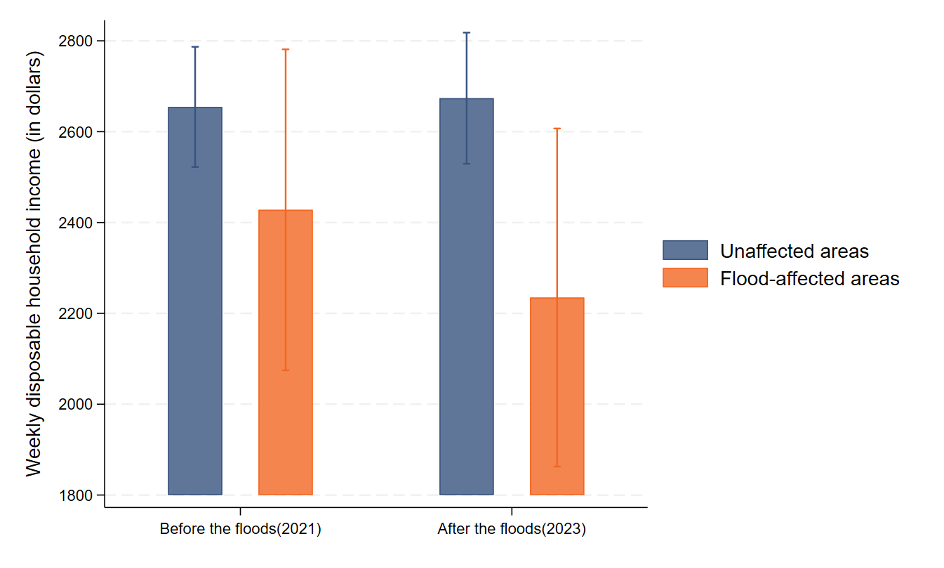
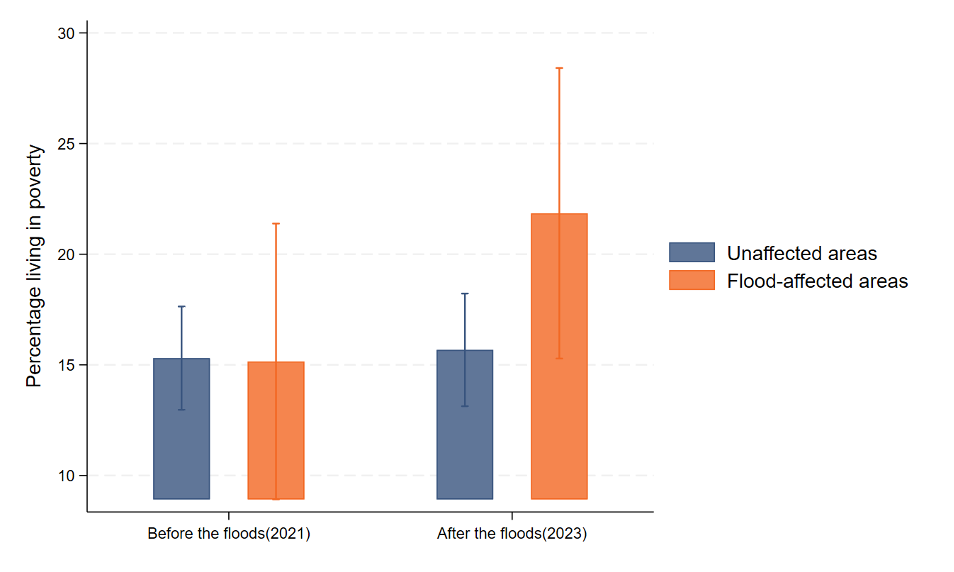
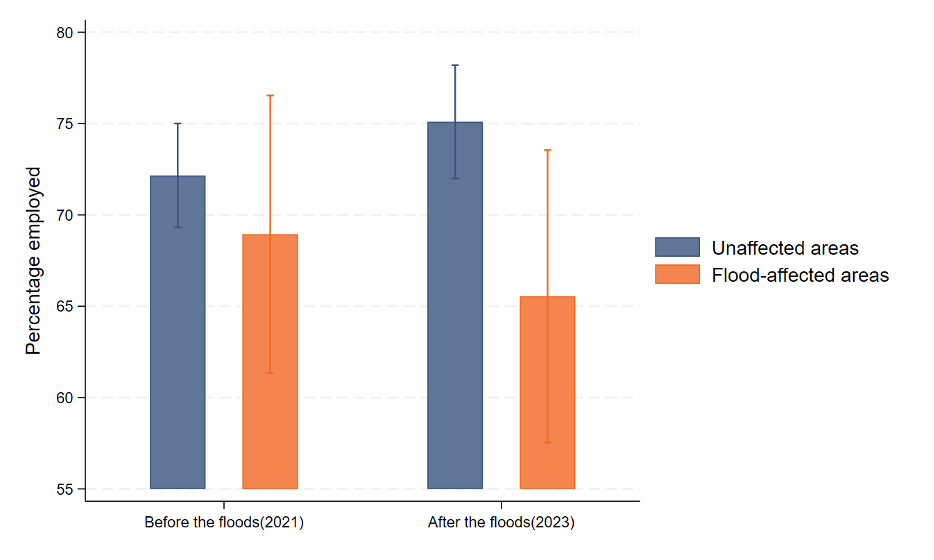
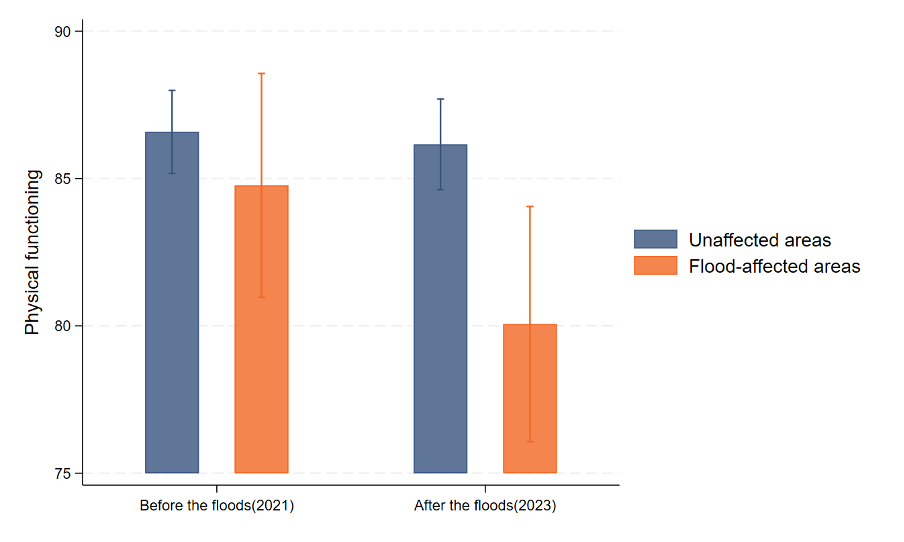
Following the 2022 floods, the Australian Government, Victorian Government and local governments put in place a number of supports for Victorians impacted by the floods, with $1.66 billion spent on flood relief and recovery by June 2023. Supports for households included relief and reestablishment payments as part of the Personal Hardship Assistance Program and the Flood Recovery Support Program.
However, this report makes clear that more needs to be done to support those most impacted, and to address the risk that future emergencies will further entrench spatial injustice.
Recommendations
- Recommendation 1: All levels of government should invest in risk reduction and preparedness programs for people experiencing poverty and socioeconomic disadvantage in high flood-risk areas.
- Recommendation 2: Local emergency management planning should meaningfully involve communities experiencing spatial injustice and higher risk of disasters.
- Recommendation 3: All levels of government should support self-determination for First Peoples in emergency preparedness, response and recovery.
- Recommendation 4: All levels of government should support multicultural communities to lead emergency preparedness, response and recovery.
- Recommendation 5: The Commonwealth and Victorian governments should increase financial support for people who experience disasters.
- Recommendation 6: The Commonwealth and Victorian governments should provide additional supports to address loss of income and employment during recovery.
- Recommendation 7: The Commonwealth and Victorian governments should increase investment in psychosocial recovery after disasters.
VCOSS is the peak body for Victoria’s social and community sector, and the state’s premier social advocacy body. We work towards a Victoria free from poverty and disadvantage, where every person and community experiences genuine wellbeing. Read more.
We welcome the opportunity to provide this input.
This work is authorised by VCOSS CEO Juanita Pope.

VCOSS acknowledges the Traditional Owners of Country, and we pay respect to Elders and Ancestors. Our business is conducted on sovereign, unceded Aboriginal land. The VCOSS offices are located on Wurundjeri Woiwurrung land in central Naarm.