Disaster resilience
◤ On this page
○ Multicultural communities
○ At-risk people
○ Emergency bodies
○ Sector organisations
○ Bushfire recovery
Community service organisations are effectively local resilience hubs helping Victorians before, during and after emergencies.
The community sector is deeply embedded in every Victorian community, across metropolitan and country Victoria. People trust local organisations and rely on them for vital support and information in times of crisis.
VCOSS advocates for organisations involved in emergency management, researches the uneven impacts of disasters on people already experiencing disadvantage, and leads projects to enhance community and personal resilience.
Cant find what you’re looking for? Please let us know.
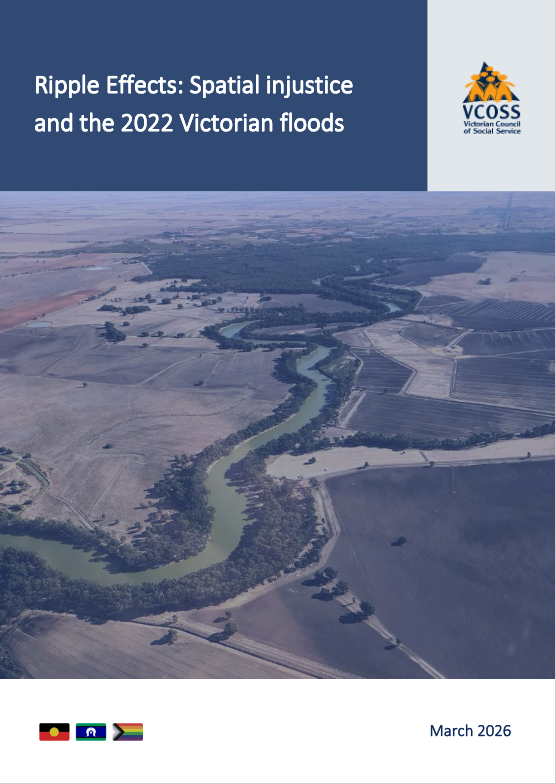
Ripple Effects: Spatial injustice and the 2022 Victorian floods
VCOSS and The University of Melbourne have launched a major new report that sheds light on the links between disasters, poverty and other inequalities across Victoria.
Ripple Effects: Spatial injustice and the 2022 Victorian floods offers the first comprehensive quantitative analysis of spatial injustice and the 2022 floods that impacted 63 of Victoria’s 79 local government areas.
Disasters like the 2022 floods affect everyone, but not equally. Taking into account community-level impacts, the report finds that:
- A majority (59%) of regional flood-affected areas had rates of poverty above the regional average
- Poverty increased after the floods, with one in five people in affected areas experiencing poverty the following year, as well as a higher risk of depression
- After the floods, disposable income was $22,818/year lower for households in affected areas compared to similar households elsewhere
- Affected areas also saw an increase in unemployment and nonparticipation in the labour force, along with the need for government income support
- Aboriginal and Torres Strait Islander people as well as culturally and linguistically diverse people were more likely to live in regional flood-affected areas
Importantly in the context of recent flooding and bushfires that devastated many Victorian communities, the report makes clear that more needs to be done to support those most impacted by disasters, and to address the risk that future emergencies will further entrench spatial injustice. It includes concrete recommendations to all levels of government.
Read the report below.
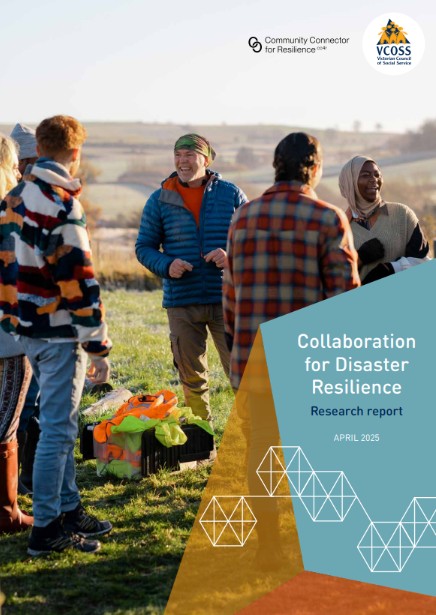
Research Report: Collaboration for Disaster Resilience
All systems and actors involved in disaster management are motivated by the goal of mitigating harm and building resilience. But to build a more resilient society in which all Victorians can thrive, the way these systems work together matters.
Community organisations play a key role in collaborations for disaster resilience due to their trusted role in the community. Community organisations play a key role in collaborations for disaster resilience due to their trusted role in the community. The community sector provides supports that knit together to form a safety net for Victorians who are most impacted by emergencies.
In 2024, VCOSS conducted research to capture lessons from disaster resilience collaborations between the community sector, government and emergency management agencies in Victoria, and identify actions to strengthen collaboration. The report showcases six case studies of collaborations across a diversity of geographies, emergencies, and project aims
The report identifies:
- Outcomes of collaborations in practice
- Challenges encountered
- Four key enablers of collaboration
- Practices by collaborations that support each enabler
- Policy recommendations to strengthen each enabler
The six studies featured in the report include:
- Climate Partnerships Project, a partnership between Jesuit Social Services’ Centre for Just Places, ARC Justice, Eastern Community Legal Centre, and the Federation of Community Legal Centres.
- Emergency Planning Advice Service, a collaboration between CFA, Australian Red Cross and the Victorian Council of Churches Emergencies Ministry.
- Gippsland Lakes Complete Health’s recovery casework
- Mornington Peninsula Resilience, Relief and Recovery Network, convened by Mornington Peninsula Shire.
- Mount Alexander Connectors program, convened by Mount Alexander Shire Council.
Multicultural Community Engagement Network, supported by enliven Victoria (part of Each)
Download the full report
Read a summary of the report
Watch the Launch: Recorded on Tuesday, 1 April 2025

Communities at the centre: Insights from the Multicultural Resilience Project
Disasters might not “discriminate”, but nor do they impact everybody the same.
Following the devastating floods across Victoria in October 2022, VCOSS initiated the Multicultural Resilience Project. The aim was to support multicultural communities across the north and north-west of the state to continue to recover, rebuild, and strengthen resilience in the case of future disasters.
Using a co-design approach, VCOSS partnered with four local multicultural community organisations to take the lead in co-designing a resource with their communities to address a pressing issue. From delivering health advocacy training with seasonal workers in Shepparton to creating an emergency management 101 video for newly arrived families in Wodonga, each solution developed was completely unique.
The insights report highlights the common experiences, challenges, strengths and needs of regional multicultural communities during and after the floods.
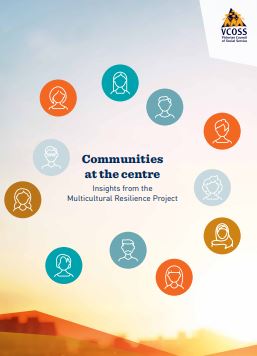

Working with at-risk people
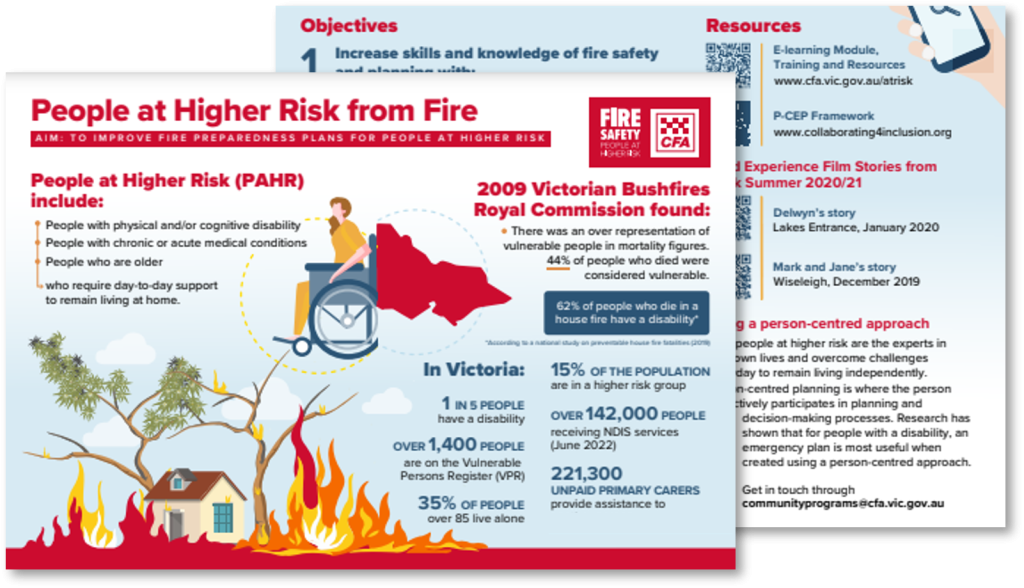
Having a disability or mobility challenge can put you in great danger during an emergency.
We’re working with the Country Fire Authority, the Red Cross and others to help people with a disability better plan and prepare for emergencies.
This program involved volunteers visit people in their homes and use a ‘Person-Centred Emergency Preparedness Toolkit’ to consider a person’s strengths and challenges, so they can make a plan together.
Links:

Engaging with emergency bodies
When preparing for emergencies, it’s critical the right voices are heard and their perspectives are valued.
VCOSS represents the community sector in several emergency management committees led by the Victorian Government, including the State Relief and Recovery Team.
We use this forum to share inisights about what frontline organisations’ need before, during and after emergencies, so they are best place to serve and support their local communities.
Something we should know? Please get in touch.
Supporting sector organisations
The emergency management space can be complicated and confusing.
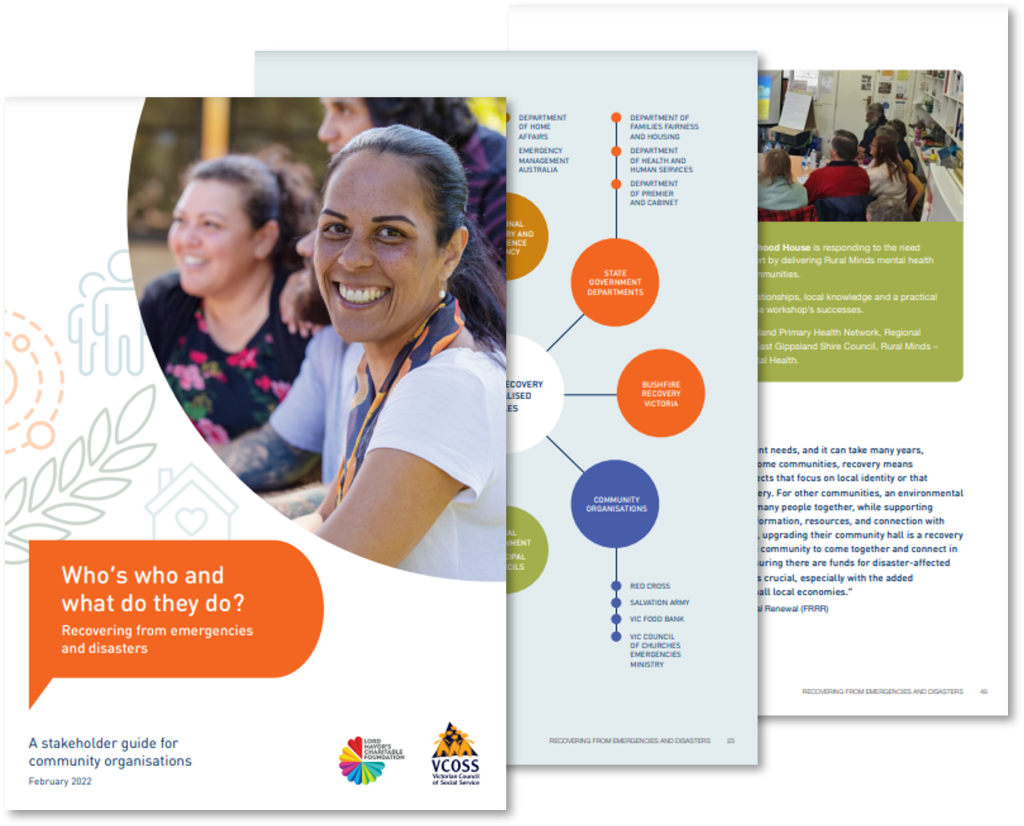
VCOSS has produced a stakeholder guide to help community organisations understand the roles different organisations, authorities and government agencies perform.
‘Who’s who and what do they do?’ also provides guidance on how organisations can connect with other local agencies and become more involved in government recovery processes.

Bushfire recovery
Australia endures more than its fair share of bushfires. Now with climate change, these blazes are becoming more common, intense and destructuve.
Over a long period of time the Victorian community sector has delivered successful place-based bushfire recovery initiatives.
We have profiled a series of these programs in a series called ‘Community Organisations in Action’, for other sector organisations to study and learn from.
Download profiles
Further reading
Read more

VCOSS acknowledges the Traditional Owners of Country, and we pay respect to Elders and Ancestors. Our business is conducted on sovereign, unceded Aboriginal land. The VCOSS offices are located on Wurundjeri Woiwurrung land in central Naarm.